Kategorijos
Naujausias dienoraštis
Kaip išsirinkti tinkamą išmaniųjų viešbučio spynų sistemą jūsų objektui
Tinkamos išmaniųjų viešbučio spynų sistemos pasirinkimas nėra vien tik spynų dizaino, prieigos būdų ar vieneto kainų palyginimas. Tinkamas sprendimas priklauso nuo to, kaip veikia jūsų viešbutis, kaip svečiai registruojasi, kokios durys yra sumontuotos, ar sistemą reikia sujungti su PMS ir kaip objektas gali plėstis ateityje.
60 kambarių butikiniam viešbučiui, savitarnos apartamentų viešbučiui ir 500 kambarių viešbučių grupei gali prireikti visiškai skirtingų užraktų architektūrų.
Prieš lygindami atskirus modelius, pradėkite nuo savo objekto reikalavimų.
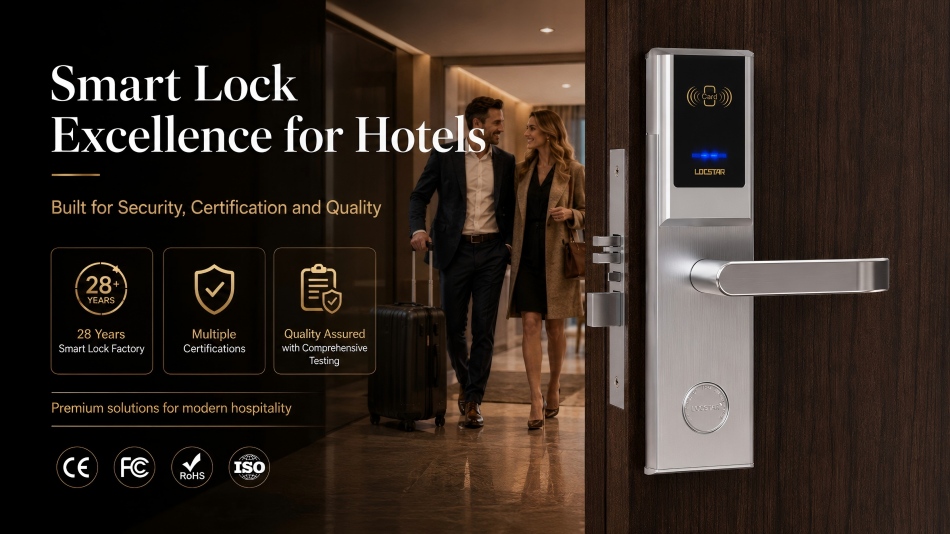
Nėra vienos viešbučio spynos, kuri būtų geriausia kiekvienam objektui.
Tradicinis viešbutis su 24 valandas veikiančia registratūra gali teikti pirmenybę RFID viešbučio spynų sistemai, kur registratūros darbuotojai išduoda raktų korteles per viešbučio valdymo programinę įrangą arba PMS.
Savitarnos objektui gali prireikti PIN kodų, mobiliųjų kredencialų arba internetinio valdymo, kad svečiai galėtų gauti prieigą prieš atvykdami.
Prieš pasirinkdami sistemą, paklauskite:
Kiek yra svečių kambarių ir kontroliuojamų durų?
Ar yra 24 valandas veikianti registratūra?
Ar svečiams reikalinga saviregistracija?
Ar spynas reikia valdyti nuotoliniu būdu?
Ar projektas yra nauja statyba, ar modernizavimas?
Kokią PMS naudoja viešbutis?
Ar liftai ir viešosios erdvės yra prieigos sistemos dalis?
Šie klausimai yra svarbesni nei konkretaus spynos modelio pasirinkimas pirmiausia.
Viešbučių spynų sistemas paprastai galima suskirstyti į neprisijungusias RFID, internetines išmaniąsias spynas ir hibridines sistemas.
| Sistema | Tipinis valdymas | Tinklo reikalavimas | Geriausia |
| Neprisijungusi RFID | Viešbučio programinė įranga + koduotuvas | Nereikia nuolatinio interneto | Tradiciniai viešbučiai |
| Internetinė išmanioji spyna | Programėlė / debesis + šliuzas / tinklas | Būtinas internetinėms funkcijoms | Savitarnos ir nuotoliniu būdu valdomi objektai |
| Hibridinė | RFID + PIN / mobilusis + internetinis valdymas | Priklauso nuo konfigūracijos | Viešbučiai, kuriems reikia didesnio lankstumo |
Tradicinės RFID viešbučių spynos išlieka praktiškas pasirinkimas daugeliui viešbučių, nes kambario spyna gali veikti be nuolatinės interneto prieigos.
Įprastą sistemą gali sudaryti:
Viešbučių spynos + valdymo programa + kortelių kodavimo įrenginys + RFID kortelės + duomenų rinktuvas + energiją taupantys jungikliai
Ši architektūra ypač tinka viešbučiams, kurie svečių korteles daugiausia išduoda registratūroje.
Internetinė viešbučio spynų sistema yra tinkamesnė, kai viešbutis pageidauja tokių funkcijų kaip nuotolinis prisijungimo duomenų valdymas, laikinieji PIN kodai, prieiga per programėlę arba centralizuotas valdymas.
Pavyzdžiui, išmaniosios viešbučių sistemos gali palaikyti darbo eigą, kai prisijungimo duomenys sukuriami konkrečiam įsiregistravimo ir išsiregistravimo laikotarpiui.
Kai kuriems viešbučiams RFID kortelių derinimas su PIN kodais arba mobiliaja prieiga suteikia didesnio lankstumo.
Tikslas neturėtų būti pasirinkti daugiausia funkcijų turinčią technologiją. Turėtų būti pasirenkama architektūra, atitinkanti kasdienę viešbučio veiklą.
Skirtingi prieigos būdai sprendžia skirtingas veiklos problemas.
| Prieigos būdas | Pagrindinis pranašumas | Moterų apribojimas | Geriausias taikymas |
| RFID kortelė | Patikima ir įprasta | Reikalauja kortelių valdymo | Daugumai viešbučių |
| PIN kodas | Nereikia fizinės kortelės | Reikalauja saugaus kodų valdymo | Savitarnos viešbučiams |
| Mobilusis raktas | Bekontaktė patirtis svečiui | Reikalauja telefono / sistemos integracijos | Skaitmeniniams viešbučiams |
| Biometriniai duomenys | Griežtas tapatybės tvirtinimas | Mažiau praktiška dėl dažnos svečių kaitos | Personalo / ribotos prieigos zonoms |
| Hibridinis | Daug galimybių | Didesnis sistemos sudėtingumas | Lanksčiai viešbučių veiklai |
Tradiciniai viešbučiai gali ir toliau naudoti RFID korteles, o objektai, orientuoti į savarankišką registraciją, gali teikti pirmenybę PIN kodams arba mobiliesiems kredencialams.
Daugeliui projektų geriausias sprendimas nebūtinai yra RFID arba mobilioji prieiga – tai gali būti sistema, leidžianti viešbučiui naudoti skirtingus kredencialus skirtingose situacijose.
Durų suderinamumas yra viena svarbiausių dalių renkantis viešbučio durų spynas, ypač renovacijos projektams.
Prieš užsakydami patvirtinkite:
Durų storį
Esamus spynos korpuso matmenis
Atstumą nuo durų krašto iki rankenos ašies (backset)
Esamas gręžimo skyles
Rankenos kryptį
Durų medžiagą
Vidaus arba lauko vietą
Naujam viešbučiui durys paprastai gali būti paruoštos pagal pasirinktą spyną.
Tačiau modernizavimo projektui tinkamo spynos korpuso ir mechanizmo pasirinkimas gali sumažinti papildomą gręžimą, durų remontą, montavimo laiką ir darbo sąnaudas.
Todėl profesionalus tiekėjas prieš rekomenduodamas galutinį modelį turėtų peržiūrėti durų nuotraukas ir matmenis.
Didesniems ar labiau automatizuotiems viešbučių projektams spyna neturėtų būti vertinama kaip atskiras įrenginys.
Tinkamai integruota viešbučio spynų PMS sistema gali sujungti rezervacijos informaciją, kambarių priskyrimą, svečių kredencialus ir išsiregistravimą.
Tipinė darbo eiga gali būti tokia:
Svečio rezervacija → PMS gauna užsakymą → Priskiriamas kambarys → Sukuriamas prieigos kredencialas → Svečias gauna kortelę, PIN kodą arba mobiliąją prieigą → Kredencialas nustoja galioti po išsiregistravimo
Prieš pirkdami paklauskite:
Ar viešbučio spynų programinė įranga gali integruotis su mūsų PMS?
Ar yra prieinama API arba SDK?
Ar integracija jau yra prieinama, ar jai reikia pritaikymo?
Ar svečių kredencialai gali automatiškai sekti įsiregistravimo ir išsiregistravimo laiką?
Kas teiks techninę pagalbą integracijos metu?
LOCSTAR viešbučių užrakinimo sprendimai gali palaikyti PMS sąsajas atitinkamiems projektams, o API/SDK palaikymas yra prieinamas pasirinktoms sistemoms ir integracijos reikalavimams.
Viešbučiams, planuojantiems pritaikytą automatizavimą, pagrindinis klausimas yra ne tik „Ar spyna turi programėlę?“, bet:
Ar spynų sistema gali patikimai bendrauti su esama viešbučio programinės įrangos ekosistema?
Viešbučio saugumas apima daugiau nei tik neleistino fizinio patekimo prevenciją.
Sistema turėtų leisti nustatyti skirtingas prieigos teises:
Svečiai
Tvarkymo personalas
Techninės priežiūros personalas
Aukštų vadovai
Registratūros darbuotojai
Viešbučio vadovybė
Skubios pagalbos tarnybos
Svarbios funkcijos, kurias reikia įvertinti:
Riboto laiko svečių prieiga
Pamestos kortelės anuliavimas
Prieigos įrašai
Audito sekos
Pagrindiniai ir personalo leidimai
Mechaninė avarinė prieiga
Įspėjimas apie išsikraunantį akumuliatorių
Avarinio atidarymo procedūros
Ypač RFID sistemų atveju pirkėjai turėtų suprasti, kaip valdomos svečių kortelės, pagrindinės kortelės, aukštų kortelės, tvarkymo kortelės ir kiti leidimų lygiai.
Dėl internetinės viešbučio spynos visada klauskite:
Kas nutiks, jei dings internetas?
Atsakymas priklauso nuo sistemos architektūros.
Kai kurie kredencialai gali toliau veikti vietoje, net jei laikinai nėra ryšio su debesimi, o nuotolinėms funkcijoms gali prireikti šliuzo arba aktyvaus tinklo ryšio.
Taip pat įvertinkite:
Šliuzo aprėptis
Ryšio metodas
Akumuliatoriaus keitimo procedūra
Įspėjimai apie išsikraunantį akumuliatorių
Avarinio maitinimo parinktys
Mechaninė atsarginė prieiga
Atsarginių dalių prieinamumas
Tai ypač svarbu kurortams, dideliems objektams ir viešbučiams, kurių kambariai išsidėstę keliuose pastatuose.
Viešbučio spynos pasiūlymas turėtų būti vertinamas kaip visa sistema.
Bendros investicijos gali apimti:
| Išlaidų sritis | Tipinės prekės |
| Spynų techninė įranga | Svečių kambarių spynos, viešųjų zonų spynos |
| Sistemos techninė įranga | Kodavimo įrenginys, šliuzas, kortelių skaitytuvas, lifto valdiklis |
| Kredencialai | RFID kortelės ar kiti kredencialai |
| Programinė įranga | Valdymo platforma arba debesijos paslaugos |
| Integracija | PMS/API pritaikymas |
| Montavimas | Durų modifikavimas ir montavimo darbai |
| Eksploatacija | Baterijos, techninė priežiūra ir atsarginės dalys |
Mažesnė spynos kaina ne visada reiškia mažesnę projekto kainą.
Pavyzdžiui, modernizavimo projektuose šiek tiek brangesnė spyna, kuri tinka esamoms durims, montavimo metu gali sutaupyti gerokai daugiau lėšų.
Todėl viešbučiai turėtų įvertinti bendrąsias nuosavybės sąnaudas (TCO) užuot lyginę tik kainą už vieną spyną.
Šioje lentelėje pateikiamas praktinis atspirties taškas:
| Objekto tipas | Siūloma kryptis | Pagrindinis prioritetas |
| Biudžetinis viešbutis / motelis | Neprijungta RFID sistema | Patikimumas ir kaina |
| Butikinis viešbutis | RFID + išmanioji prieiga | Svečių patirtis |
| Prabangus viešbutis | Hibridinė / internetinė sistema | Integracija |
| Kurortas | RFID / hibridinė sistema | Patvarumas ir kelių zonų valdymas |
| Savitarnos viešbutis | PIN / mobilioji prieiga / internetinė sistema | Automatizavimas |
| Viešbučių tinklas | Integruota sistema | PMS ir mastelio keitimas |
| Modernizavimo projektas | Suderinama RFID / hibridinė sistema | Durų suderinamumas |
| Naujas viešbutis | Integruota išmanioji sistema | Ateities plėtros galimybės |
Šios rekomendacijos nėra absoliučios. Prieš galutinai pasirenkant sistemą, visada reikia įvertinti kambarių skaičių, svečių aptarnavimo eigą, PMS reikalavimus, vietos reglamentus ir esamas duris.
B2B viešbučių projektuose techninė įranga yra tik viena sprendimo dalis.
Kompetentingas viešbučių spynų gamintojas taip pat turėtų padėti įvertinti:
Spynos ir spynos korpuso suderinamumą
Viešbučių valdymo programinę įrangą
PMS/API integraciją
Kortelių koduotuvus ir kredencialus
Šliuzus (Gateway)
Prieigą prie lifto
Energiją taupančius jungiklius
Montavimą
Atsargines dalis
Techninę pagalbą
LOCSTAR teikia tiek tradicines RFID viešbučių užrakinimo sistemas, tiek išmaniuosius viešbučių spynų sprendimus, leidžiančius projektams pasirinkti skirtingas konfigūracijas pagal jų veiklos reikalavimus.
Dideliems projektams rekomenduojame prieš pilną diegimą išbandyti pavyzdžius arba atlikti bandomąjį montavimą.
Prieš prašydami kainos pasiūlymo, paruoškite:
Šalį ir projekto vietą
Viešbučio ar objekto tipą
Svečių kambarių skaičių
Kontroliuojamų durų skaičių
Nauja statyba ar modernizavimas
Durų nuotraukas ir storį
Esamus spynos korpuso matmenis
Pageidaujamą prieigos būdą
PMS pavadinimą
Internetinio arba vietinio valdymo reikalavimą
Savarankiško registravimosi (self-check-in) reikalavimus
Prieigos prie lifto ar viešųjų zonų reikalavimus
Reikalingus sertifikatus
Numatomą montavimo grafiką
Kuo išsamesnė informacija apie projektą, tuo tiksliau tiekėjas gali rekomenduoti sistemos konfigūraciją.
Nėra vienos universalios geriausios sistemos. Tinkamas sprendimas priklauso nuo viešbučio dydžio, veiklos modelio, registracijos eigos, durų būklės, PMS integracijos ir reikiamų prieigos būdų.
Taip. „Offline“ RFID sistemoms nereikia nuolatinio „Wi-Fi“ ryšio. Kai kurios „online“ sistemos taip pat gali išlaikyti vietinės prieigos funkcijas laikinų tinklo sutrikimų metu, nors nuotolinės funkcijos priklauso nuo sistemos architektūros.
Taip. Profesionalios viešbučių užrakinimo sistemos gali palaikyti PMS integraciją per esamas sąsajas arba API/SDK kūrimą, atsižvelgiant į projektą ir programinės įrangos aplinką.
RFID yra labai praktiškas tradicinėms viešbučių operacijoms, o laikini PIN kodai yra ypač naudingi savitarnos apgyvendinimo įstaigoms. Kai kuriuose projektuose naudojami abu būdai.
Dažnai taip, tačiau pirmiausia reikia patikrinti esamą spyną, skyles, atstumą nuo briaunos iki rankenos centro, rankenos orientaciją ir durų storį.
Geriausia viešbučio išmanioji užraktų sistema nebūtinai yra ta, kuri turi ilgiausią funkcijų sąrašą.
Tai sistema, kuri tinka jūsų objekto durims, svečių aptarnavimo eigai, valdymo modeliui, PMS aplinkai, saugumo reikalavimams, biudžetui ir būsimai plėtrai.
Kaip viešbučių užraktų gamintojas ir sprendimų tiekėjas, LOCSTAR gali padėti įvertinti tiek užraktų techninę įrangą, tiek visą viešbučio užrakinimo sistemą – nuo RFID viešbučių užraktų ir išmaniųjų „online“ užraktų iki programinės įrangos, priedų ir PMS/API integracijos reikalavimų.
Atsiųskite mums:
Objekto tipas + šalis + kambarių skaičius + durų nuotraukos + PMS + pageidaujamas prieigos būdas
Mūsų komanda gali įvertinti jūsų projekto reikalavimus ir rekomenduoti tinkamą užraktų architektūrą, techninės įrangos konfigūraciją bei integracijos kryptį.
Antrinis raginimas veikti (CTA):
 en
en es
es ar
ar lt
lt 中文
中文